Monday, May 30, 2022

The Death Disc: 7 Songs That Put The Morbidity In Music

During the late 1950s and early 60s, a popular sub-branch of pop music surfaced known as the "teen tragedy". Also known as "death discs", these songs dealt with, well... death! They involved tragic tales of a main protagonist dying. So today, I've decided to look at 7 death discs, some that defined the "genre", and others that fly under the radar. Let's start with the most obvious one.

1.) Leader of the Pack by the Shangri-Las

After this song was released in 1964 and hit #1, the death disc kind of faded out. Perhaps it's because there truly was few songs that could top this one in terms of tragedy and drama. The basic premise is that some girl has a boyfriend, but he's a trashy biker type. Her parents don't approve! Just after the girl is forced into breaking up with the biker, he runs off and dies in a crash. That part of the song is quite climactic, with some of the girls yelling "No, no, no, no", while lead singer Mary Weiss screams "Look out!".

Weiss insisted that the Shangri-Las be remembered as a true rock 'n roll group, and not just a "girl group". In any case, this is her group's signature song, along with "Remember (Walkin' In The Sand)". That song, of course, was in Goodfellas (RIP Ray Liotta). Also, Weiss was only 14 when she sang this song. That makes this scene from the music video seem all the more creepy. 

They would not be able to get away with this shit today!

2.) Dead Man's Curve by Jan and Dean

Jan and Dean were the poor man's Beach Boys, famous for their cheerful song "Surf City". Much like that song, Brian Wilson wrote this one for his lesser California surf rock contemporaries. Released in late 1963, this song is about a drag race (much like The Beach Boys' "Don't Worry Baby"). But this one has a much darker story than the Beach Boys' one. Much like the Shangri-Las "Leader of the Pack", the singer narrates some of the tragedy in spoken word form. In this case, he narrates the events of the crash to a doctor. The sounds of screeching tires are heard as the song fades out. The message of the song? Don't go drag racing, and better yet... don't go drag racing on a nearly 90 degree turn!

3.) Casey Jones by Billy Murray

The original death disc? Well, it's quite possibly this one right here! Recorded all the way back in 1910, this song is the true magnum opus of my favorite singer of that era, Billy Murray. Back in the day when the recording technology was so primitive that you sang into a can, Billy put a lot of heart into singing about a brave railroad engineer. His name? Well, it was Casey Jones. And Billy sings all about how he was involved in a crash with "two locomotives". Casey was heroic though, as he helped save lives by sacrificing his own during the "bump". I also gotta mention Billy's great backers in the American Quartet, who were also there on his most famous song, "Over There".

Billy Murray, the great musical genius of the early 20th century.

4.) El Paso by Marty Robbins

No list of death discs would be complete without this masterpiece from Marty Robbins. It is not only his greatest commercial success, but in my opinion, his finest song. It hit #1 at the start of 1960, and is the tragic tale of a man who finds himself in love with a Mexican woman. However, the whole town around him hates him, and at the very end, he's chased down by mounted cowboys and shot to death. The whole melodrama takes place over the span of 4 minutes and 19 seconds, a very unusually long song for that time. But Robbins needed every second to tell this great story, as he wrote all the lyrics to this poetic song. While "Big Iron" gets a lot of attention now, "El Paso" is still the truest gunfighter ballad of them all.

This epic album cover has been widely embraced by meme culture.

5.) Running Bear by Johnny Preston

What song supplanted El Paso from the #1 spot in the winter of 1960? Well, it was none other than this one right here! Much like they wouldn't be able to get away with the creepy pedophile motorbike rider I talked about earlier, they also wouldn't be able to get away with the casual racism in this song. This is a Romeo and Juliet-like love story where two Natives live on opposite sides of the river, but their tribes hate each other. So they try to swim across the stream, but they can't make it, and they drown! The song begins and ends with what can best be described as an Indian war cry. Oh, and The Big Bopper (the guy who died in the plane crash a year earlier) supplies background vocals, repeatedly singing "Unga bunga". Yep, this song definitely is not suitable for sensitive listeners in the 21st century.

6.) Give My Love to Rose by Johnny Cash

This is a song I've written about before in my 10 greatest Johnny Cash songs list, which you can read about right here. But it's worth writing about again, as it tells the tragic story of a prisoner along the railroad track who is dying. So he tells the narrator to give his love to his wife Rose, and to give her whatever money he has left. Cash recorded many versions of this song throughout his career, including the original from 1957. But it gets more and more emotional as you go along, from the 1968 Folsom Prison concert, all the way to his heartbreaking 2002 performance. I combined those 3 versions into one song, and posted it on YouTube.

Johnny Cash's final recording of "Give My Love to Rose" is among the best of his long career.

7.) The Bells by Billy Ward and His Dominoes

If "Leader of the Pack" is the most definitive and famous death disc, this one is the most brutal. If you've ever heard "Valerie" by Jackie and the Starlites, this song seems to somehow outdo that one in terms of the lead singer having a tear-filled breakdown. But that's probably because, instead of the woman breaking up with him, the woman is dead! The song talks of horse-drawn carriages and funeral bells ringing. Lead singer Clyde McPhatter earns his stripes as a double Rock 'N Roll Hall of Famer on this one, bawling his eyes out, and straight up screaming at the end. In fact, he should be a triple Rock 'N Roll Hall of Famer. He's inducted as a Drifter and a solo artist, I'd put him in as a Domino based on this song!

The Dominoes were short lived, but certainly made their impact on rock 'n roll history.

So what are some other "death discs" you think I missed out on? Let me know in the comment section of this article. In my opinion, the best of these songs is "El Paso", the most definitive is "Leader of the Pack", and the most purely tragic one is "The Bells". Seriously, give that song a listen!

Thursday, May 19, 2022

5 Presidents and Their Favorite Kinds of Music

Lately, I've been reading a book called "Abe" by David S. Reynolds. It's a cultural biography, aiming to examine the life of Abraham Lincoln from a cultural perspective. So, it talks about matters such as his religious background, the frontier life he grew up with, and yes... even his taste in music! That got me thinking, what are the musical tastes of some famous presidents? Well, I'm going to attempt to answer that question with this blog post. I will be examining the musical tastes of two historical presidents, as well as the three most recent ones. Let's get started.

1.) George Washington

The first president of our country had quite the wise quote regarding music. He said, "Nothing is more agreeable, and ornamental, than good music". To take his words from the 18th century to the 21st century, he's basically saying that nothing beats good music. As for the music that Washington himself liked, perhaps it's unsurprising that the general enjoyed a good battle march. Perhaps he would have liked the selections from R. Lee Ermey in Full Metal Jacket! But given that he was an aristocrat that married into immense wealth, he enjoyed the classier music as well. He listened to operas, like the famous Handel work "Hallelujah". 

Evidently, Washington had no musical talent, as he could not sing or play an instrument. But he knew the importance of good music, even in ordering his army around. I learned from the Mount Vernon website that in 1777, Washington ordered his drum and fife majors to improve their music. He reported that the "music of the army [was] in general very bad". It takes a meticulous man like Washington to know that good music was important, even during a time of war. And while Washington was not himself a good musician, his granddaughter evidently became an excellent harpsichord player.

George Washington wanted good music, for the morale of his troops!

2.) Abraham Lincoln

The inspiration for this article, Honest Abe was much more into the everyday music of the frontier than the classy opera of his day. A friend noted that Lincoln's "tastes were simple and uncultivated, his choice being old airs, songs, and ballads". Like Washington, Lincoln had no musical talent, but seemed to appreciate music much more. Lincoln was famous for having what in his days would be described as "the melancholy", or "the hypo". In other words, he had depression. And as such, he had an appreciation for tragic, or "sensational" songs. One example is "The Irish Mother's Lament", a song about a woman who curses her three boys for disobeying her orders, but then goes mad with grief when she finds her sons all drown in a lake. One must also realize that the frontier culture that Lincoln grew up with was violent, so he enjoyed sensational songs like "The Oxford Girl". That one tells of a man who bludgeons his partner to death, proceeding to throw her corpse into a river. What interesting songs indeed!

The music that Abe liked was politically incorrect, on multiple counts. In a grammatical jumble of words, one acquaintance Lincoln had described him as liking "Little Smuty Songs I wont Say any thing a Bout would not look well in print". One of the songs was "I Won't Be.a Nun", which talks about a woman who tells her mother she is too pretty and too wild to be a nun. Doesn't seem that bad, but we must remember, this is the 19th century we're talking about! On the other hand, there are songs that seem horrible now, but again... we must remember this is a different era. That's because Lincoln enjoyed a lot of the minstrel songs of his day. He liked songs like "Old Dan Tucker", "De Blue Tail Fly", and yes... a song called "Jim Crow". While Lincoln is known as The Great Emancipator, we have to remember that the time he lived in was really quite different.
If Abe was two-faced, would he really be wearing this one?

3.) Barack Obama

Let's discuss the first of our modern presidents on the list. We know Obama is a music fan, as he often shares out his favorite music of the year. He stays up to date with the popular music of the day, much more than I do, honestly. I do know that I like one of his 2021 picks, "Freedom" by John Batiste. But honestly, I don't recognize another song on there. But Obama certainly likes music from a wide variety of genres and eras. In anticipation for his 2020 memoir "A Promised Land" (which I read), Obama made a list of songs that were important to him during his time in the White House. Some notable selections include "The Times They Are-a-Changin" by Bob Dylan, "Lose Yourself" by Eminem, "Sir Duke" by Stevie Wonder, and "Luck Be a Lady" by Frank Sinatra. 4 completely different genres, but 4 great choices.

But there's one song on the list that must have had particular importance to him. Well, I know it would've had importance to me if I was in his shoes! That's because Barack had the privilege of having his First Lady being serenaded in the White House by Paul McCartney. What was the song? Well, it was "Michelle", of course.  We know Obama's taste in music is eclectic, but one artist in particular he seems to appreciate is Bruce Springsteen. He even hosts a podcast with him now. 
Ah, the retirement life of an ex-president.

4.) Donald Trump

Oh boy, I'm really doing this. Well, here goes. One article I read describes Trump as "more of a Rolling Stones fan than a Beatles follower". He had the audacity to call Paul McCartney a "schmuck". Hmm, why does that not surprise me? Other favorite artists of his include Queen, Elton John, and Eminem. All right, as much as I dislike Trump, I can't say he's wrong with these selections. But these artists, and the surviving members of Queen, sure as hell don't want their music playing at his rallies! There's a whole Wikipedia article that details a whopping 25 "musicians who oppose Donald Trump's use of their music". 25! One notable example was how the estate of George Harrison said that Trump did not have permission to use "Here Comes The Sun" to introduce Ivanka during the 2016 RNC. However, they did note that Trump had permission to use Harrison's song "Beware of Darkness".

Much like Obama, he's a big fan of the Eminem song "Lose Yourself". But again, Eminem is one of many artists who have expressed their disgust with Trump. Trump's all-time favorite song is evidently "Is That All There Is?" by Peggy Lee. While Trump's musical tastes are not quite as diverse as Obama's (he prefers a lot of the boomer-age stuff)... he does enjoy some reggae as well. I will end this segment by saying that Trump apparently claims to have punched his second grade music teacher, because he "didn't think he knew anything about music". His classmates claim that story was bullshit though, so who knows.
While Trump likes Eminem's music, Slim Shady is not a fan of 45.

5.) Joe Biden

Biden has a somewhat diverse taste in music like Obama, but unlike Obama, we gotta remember that Joe is 79 years old! As such, his music taste... well, it's a bit like mine. Or as Rock NYC put it in their article from a year ago, the writer "didn't expect to find hip hop songs on a playlist of a 78-year old man". That's not to say Biden doesn't enjoy some modern pop music, but it's soulful stuff like "Stay With Me" by Sam Smith or "Hello" by Adele. In other words, modern songs that are actually pretty good. Biden appears to be a pretty big R&B fan, enjoying songs like "Higher and Higher" by Jackie Wilson, "Good Times" by Sam Cooke, and Aretha Franklin's rendition of "The Weight". 

Much like Obama, he's a Beatles and a Springsteen guy. His favorite Beatles song appears to be "Come Together". In terms of some truly old school artists (we gotta remember, Biden ain't new), he enjoys Ray Charles and Frankie Valli. One of his favorites is "Can't Take My Eyes off You", which is indeed an excellent song. While Biden can surely stumble over his words sometimes, we gotta remember his cool side as well... driving in his 'Vette and playing some oldies music. 
I bet he's begging the Secret Service to let him drive again.

Well, that's my list for the day. It combines two of my passions, history and music, all into one neat little article. Hope you've learned a bit about the music tastes of these commanders-in-chief. I suppose when I'm president someday, they'll write about how much I enjoy "El Paso" and "Smokey Joe's Cafe"!

Thursday, May 12, 2022

Reviewing Rolling Stone's Top 500 Songs List

Last week on this blog, I wrote about my reactions to UGHA's Top 500 all time doo wop songs. Well, this time I'm going to be looking at music in more of a general sense. That's because I'm going to be reviewing Rolling Stone's Top 500 all time songs list, published last year in 2021. RS originally did their list in 2004, but I will be examining the updated one. I am not going to be saying any of the songs on the list are underrated, because "Top 500 all time" is obviously high praise. But I will be going over some songs I think got snubbed, so let's start there.

Here's the art that Rolling Stone used for their article.

Songs That Got Snubbed

Somebody to Love by Queen (1976): The only Queen songs on the list were "Bohemian Rhapsody" and "Under Pressure". Now rest assured, this list is supposed to rank The Top 500 greatest songs, not the top songs overplayed on classic rock radio. But if it truly wanted to accomplish the first mission and not the second, this harmonious Queen masterpiece would've made the cut.

I Can't Stop Loving You by Ray Charles (1962): This was #161 on the original list, so my question is... what happened? This is Ray's absolute masterpiece in my opinion, with his soulful vocals being backed up by an excellent choir. It was a cover of a country song, showing Ray's diverse musical tastes. No disrespect to "Georgia On My Mind", but I'll take this one as Ray's best song any day.

Summer Wind by Frank Sinatra (1966): How is it that in a list compiling the 500 Greatest Songs of All Time, 'Ol Blue Eyes doesn't even get one? I'm not even the biggest Sinatra fan, and I still think that's a travesty! If there's any song I'd strongly advocate for Sinatra, it's this one. It's a vocal and orchestral masterpiece, and evidently Bruce Springsteen's all-time favorite song.

What does Rolling Stone have against Italian people?

Turn! Turn! Turn! (To Everything There is a Season) by The Byrds (1965): The critics can't get enough of "Eight Miles High" and "Mr. Tambourine Man". I won't deny, those are good songs. But to me, the best Byrds song is this one, with its jangly lead guitar and Pete Seeger-written lyrics. 

Me and Bobby McGee by Janis Joplin (1971): This made #148 on the original list, so again I must ask, what happened? Kris Kristofferson's writing and Janis's singing were truly a dynamic duo on this song. I would've supposed that Janis's powerful vocals stood the test of time, but I guess not. Rolling Stone didn't even put one of her songs on their list.

Revolution by The Beatles (1968): With Rolling Stone's love for protest songs, you'd think that this very underrated Beatles song might stand a chance. Unfortunately, the critics once again chose its more popular A-side, which we'll cover shortly. In any case, this song's fiery lead guitar from George Harrison, as well as the raucous vocals from John Lennon, will forever make it one of my all-time favorites

In case you haven't noticed, I'm a little more biting in my critiques than last week. I truly believe these songs and artists were robbed of their place on this list. Other songs that I'd argue deserve a spot are "Just The Way You Are" by Billy Joel, "Bring it On Home to Me" by Sam Cooke, and "El Paso" by Marty Robbins. Doo wop was also robbed of a rightful place on this list, with "In The Still of the Night" and "I Only Have Eyes For You" being the only selections... on a list of 500! In comparison, the original 2004 list also had "Maybe" by the Chantels and "Sh Boom" by the Chords, two excellent choices. Now, I'm not done tearing this list to shreds. Let's get into the songs that are darlings for the critics, but not for me.

Songs That Were Overrated

#426: Super Bass by Nicki Minaj (2010): I know it's only #426, but give it one listen and you'll want to rip your ears out. This belongs on a worst songs of all time list, not the best. If you think I'm kidding, listen to it. You'll get a headache, and regret it instantly.

#287: You Shook Me All Night Long by AC/DC (1980): There's way better songs on the Back in Black album than this one. It's definitely a solid tune, but it is overplayed constantly. For being the only AC/DC song on the list, they sure did pick an underwhelming one. Where's the love for Bon Scott?

#156: Louie Louie by The Kingsmen (1963): This song was evidently quite influential to garage rock, and its guitar riff became iconic. But the song itself? Well... it's kinda lackluster to be ranked this high. The vocals just sort of ramble. There's plenty of songs from the rock era that could've taken its spot.

#89: Hey Jude by The Beatles (1968): As an unofficial Beatles ambassador, I get the right to say which of their songs are under or over-valued. This one falls right into the latter category. At least it wasn't ranked at #8 like on the original list. But this McCartney pop confection, while fun to sing at stadiums, is not one of the Top 100 greatest songs ever. It's not even one of the Top 100 Beatles songs ever!

The critics must be hypnotized by Paul's stare on the "Hey Jude" video.

#61: Stairway to Heaven by Led Zeppelin (1971): This song that rambles on (no pun intended) for almost 8 whole minutes is another one of those overappreciated songs from the rock era. I've just never been able to get into it. Give me "Black Dog" or "Rock and Roll" over this song any day.

#30: Royals by Lorde (2013): I remember this song when it came out, and I must say, it ain't bad. But #30 all time? Really? The song is a bit low-key for that. However, I will note that the YouTube channel ADoseofBuckley, who is fiercely critical of modern pop music, actually gave this song a relatively positive review. So again, it's not bad, but I just don't think it's worthy of all-time status.

Other songs that I thought were too high include "Born to Run" by Bruce Springsteen at #27, "Gimme Shelter" by The Rolling Stones at #13, and "Like a Rolling Stone" by Bob Dylan at #4. I should also note that RS had multiple songs from 2019 and 2020 on the list. Shouldn't they give those songs some time to have a legacy before they're already hailed as all-time greats? Besides, they couldn't have picked better songs than "Old Town Road"? Give me a break. Also, three Madonna songs is three too many. But okay, enough negativity. Let's get to the songs I was happy to see appear.

Songs I Was Glad To See On The List

#324: Scenes From an Italian Restaurant by Billy Joel (1977): If a song goes on for seven and a half minutes, then it better be good. Well, this one is great! From the piano intro section, to the jazziness, to the "Ballad of Brenda and Eddy" section, this song is brilliant. Of course, they should've had more Billy Joel songs on the list. But I won't give RS a hard time, I'm just glad that the Joel song they picked is truly one of his all time greatest.

#241: The Humpty Dance by the Digital Underground (1990): I was pleasantly surprised to see this goofy yet brilliant rap song on the list. The song is all about how the protagonist named "Humpty Hump" will get all the ladies, in spite of his homely appearance and comedically large nose. The cover art may be even better than the excellent song.

Here's Humpty Hump. He once got busy in a Burger King bathroom!

#190: Fuck tha Police by NWA (1988): This incredibly bold rap song is one of my all-time favorites, and is surely a definitive protest song. All three rappers on this song have a fantastic flow, and deliver all their lines with heat. Ice Cube begins the song, he tosses the mic to MC Ren, and then the grand finale comes with Eazy E. Eazy is one of my favorite rappers of all time, and another artist that died far too young.

#98: In My Life by The Beatles (1965): John Lennon's masterful introspective work from the mid-60s was perhaps at its peak in the mid 60s. And there's no better introspective song than "In My Life". Now, the original list had it at #23 all time, which I think is a more appropriate ranking than #98. But either way, I'm glad to see this song made the Top 100.

#70: Suspicious Minds by Elvis Presley (1969): Bar none, the greatest song the King ever sung in my opinion. And RS seems to agree, with "Heartbreak Hotel" and "Jailhouse Rock" coming in much lower on the list. "Suspicious Minds" is a soulful masterpiece with excellent backing vocals from four women (including Donna Thatcher of the Grateful Dead). And some credit should be given to Mark James, who originally wrote and sung the song. But Elvis perfected it.

#58: The Weight by The Band (1968): This song is actually about my hometown of Nazareth, PA, not the biblical Nazareth! But it's not just hometown bias that makes me love this song, as the critics love it, too. With excellent country rock vocals from Levon Helm, and wildly engaging lyrics, this song earns its place as one of the 100 greatest I've ever heard. The Band never replicated anything like this from what I've heard... they truly caught lightning in a bottle with this.

There are plenty of other songs that I was glad to see get representation on the list. If I also made a Top 500 songs list, these songs would definitely make it. They include:
#476: Sunday Morning Coming Down by Kris Kristofferson (though I should note, I prefer the Johnny Cash version, and I'd rank it a lot higher than this!)
#420: California Dreamin' by The Mamas and The Papas
#333: Papa Was a Rollin' Stone by The Temptations
#316: Leader of the Pack by The Shangri-Las
#300: Rock Lobster by The B-52s
#213: Paint It, Black by The Rolling Stones (yes, I don't hate the Rolling Stones!)
#182: Sounds of Silence by Simon and Garfunkel
#167: Lose Yourself by Eminem
#165: I'm So Lonesome I Could Cry by Hank Williams (shoutout to RS for including this song, as well as "Your Cheatin' Heart". Good to see Hank get some love.)
#110: Something by The Beatles
#102: Maybellene by Chuck Berry
#63: Jolene by Dolly Parton
#53: Good Vibrations by The Beach Boys
#40: All Along The Watchtower by Jimi Hendrix (I eventually realized it's better than "Foxey Lady")
#19: Imagine by John Lennon
#3: A Change Is Gonna Come by Sam Cooke.

Yes, given that Rolling Stone had 500 songs on their list, I was bound to agree with some of them. The ones listed above are all excellent selections in my opinion. And because 500 songs are a lot, there are plenty I haven't heard of that caught my eye. As I stated earlier, Rolling Stone loves its protest songs. There were certainly some interesting ones on the list, including "Mississippi Goddam" by Nina Simone, and "Strange Fruit" by Billie Holiday. The songs deal with very serious topics, as the former talks of a KKK massacre, and the latter is about lynching. I also want to check out James Brown's song "Say It Loud (I'm Black and I'm Proud)". But British people had their share of protest songs as well, and that's why I gotta check out "God Save The Queen" by Sex Pistols. I mean, look at the cover art!

Finally, I have to check out "Blue Eyes Crying in the Rain" by Willie Nelson. I have to get into more of his music, and this song is particularly intriguing. After all, it was written by Fred Rose, who was the producer for Hank Williams. Overall, the RS list is kinda meant to spark some debate and outrage. Certainly, it can't make everyone happy. I was definitely unhappy with some selections! But, I feel like a lot of solid songs got some worthy representation on their 2021 list.

Thursday, May 5, 2022

Looking at UGHA's Top 500 Doo Wop Songs List

There's nothing that says dedication to music like a Top 500 songs list! I know Rolling Stone has done multiple attempts at creating a Top 500 all time songs list, but how about one just for doo wop? Well, I recently checked out a list that UGHA (United in Group Harmony Association) made in 2000. UGHA members were asked to vote on what some of their all time favorite doo wop songs were, and so a giant Top 500 list was compiled from that. 500 songs sure is a lot, and I'm not going to claim I even know half of the songs on their list. But I feel as though I know enough about doo wop to have my own opinion on it. And so, I'm going to say where I think this list hit the mark, and where I disagree with it. Let's get the negativity out of the way first, then.

Songs That Got Snubbed

The Platters did not get a lot of love on this list.

First, we have to acknowledge some of the songs that absolutely deserved to be on the list, but weren't included. That starts with "The Great Pretender" by the Platters. The Platters generally got snubbed on this list, with only three of their songs appearing (Only You, My Prayer, and Heaven on Earth). But to have my favorite Platters song completely off the list? Talk about a snub. It's a beautiful song with a superb lead vocal by Tony Williams. But perhaps it was snubbed for not being "street corner" enough.

Next, how about "Zing! Went The Strings of My Heart" by the Coasters? The Coasters were another group that were absolutely snubbed from the list, with none of their songs showing up. And you know what, if they didn't want all their goofy pop-style hits on there, I get it. But I'm surprised that "Zing" didn't show up as a favorite with at least some people. It's a super smooth slow jam featuring a great lead vocal by bassman Dub Jones. Totally deserving of a spot.

And while we're on the subject of the Coasters, the group that came before them (the Robins) had another worthy selection. "Smokey Joe's Cafe" is one of my all time favorites, so to not see it on the list was definitely a disappointment.

Other snubs include "Get a Job" by the Silhouettes, "Here Am I Brokenhearted" by the Four Js, "Try the Impossible" by Lee Andrews and the Hearts, "Stranded in the Jungle" by the Cadets, and perhaps most surprisingly... "Sh Boom" by the Chords. Obviously UGHA members are far too into doo wop to vote the awful Crew Cuts version onto the list, but I thought the ballsy original by the Chords would make it.

Songs That Were Underrated

I was surprised to see The Drifters' "Money Honey" so low on the list.

All the way down at #496 on the list, we find "Wishful Thinking" by Little Anthony and the Imperials. This is my all time favorite by the group, give me this song over "Tears on My Pillow" any day. So while I'm glad the song was at least acknowledged, I wish it could've been a little higher. I think it's one of Little Anthony's strongest and most passionate leads, and the background is beautiful as well.

At #476, we find "Money Honey" by the Drifters. The Clyde McPhatter-era Drifters had some fantastic songs, songs with guts. They weren't together for that long, but in that short amount of time, they recorded "Such a Night" and "White Christmas". Yet, the best of the bunch is probably "Money Honey". It's a song with a fantastic saxophone solo, and of course, a great lead from McPhatter. #476 is simply too low.

At #430 is "Let's Start All Over Again" by the Paragons. Now, I do have to give this list credit for acknowledging the great group that was the Paragons. 5 of their selections are on the list, including "Florence", "Twilight", and "So You Will Know". But this song, with its simple piano structure and falsetto lead vocal, has become an absolute favorite of mine. #430 is just too low.

Other songs that ranked out a little low for me include "Ten Commandments of Love" by the Moonglows (#405), "You Baby You" by the Cleftones (#398), "Wonderful Girl" by the Five Satins (#397), "What Time Is It" by the Jive Five (#393), and "Zoom Zoom Zoom" by the Collegians (#335). All of these songs would make my Top 100 doo wop songs list.

Songs That Were Overrated

I guess I shouldn't be surprised that "Earth Angel" by the Penguins and "In The Still of the Night" by the Five Satins made it as high as they did (#11 and #13, respectively). Both songs are certified doo wop classics, no doubt about it. But I thought a crowd like UGHA might be a little sick of hearing these songs, and therefore leave them out of their all time favorites list. Certainly I like both songs, but I wouldn't rank either so highly. For example, "Shadows" by the Five Satins was #117 on the list. It's a more obscure song than "In The Still of the Night", but I think a better one.

I was honestly surprised to see the amount of love the Heartbeats got. "A Thousand Miles Away" ranked at #16, "Your Way" at #14, and "Crazy For You" was all the way up at #3. I definitely like all of these songs, but I would not rank them so highly. Personally, I like Shep & The Limelites' song "Daddy's Home" better. And guess what, that was another snub on this list!

And finally, I know "Gloria" is the doo wop national anthem, so it might be blasphemy to say this. But I would not have the Cadillacs' classic song quite so high as #17 on my list.

Many Groups Were Rightfully Appreciated

The Harptones got their place in history with UGHA's list.

Okay, we went over enough of my disagreements with the list. Let's go over the things I think this list really got right. First of all, the love for the Harptones was strong, as it should be. The Harptones are one of the all time underrated acts in the history of music, and how they never had any commercial success is beyond me. But the doo wop aficionados of UGHA certainly appreciate the group, as they put (14!) of their songs on the list. That is the most of any group, by the way. I think it's justified, given the greatness of lead singer Willie Winfield, piano player/arranger Raoul Cita, and the beautiful harmonies that rounded out the group. They had an incredible 5 songs in the Top 30, and I don't know if I can really push back on any of them being ranked so high ("A Sunday Kind of Love" at #4, "I'll Never Tell" at #9, "Life is But a Dream at #19, "That's The Way It Goes at #21, and "My Memories of You" at #30). The list even agrees with me on "A Sunday Kind of Love", which is an all time, Top 10 favorite for me as well.

In my opinion, one group that's underrated even among doo wop lovers is the Rivieras. Well, they had 4 songs make this list! "El Dorado" made it at #413, then "Moonlight Serenade" at #310, then "Count Every Star at #113, and finally "Moonlight Cocktails" at #83. They had some beautiful slow jams, that's for sure. But I think their uptempto stuff is great, too. "Great Big Eyes", "True Love Is Hard to Find", and "Refrigerator" are all worth a listen. But I'll be happy with UGHA's love for the Rivieras here, as "Count Every Star" and "Moonlight Cocktails" are both fantastic. Lead singer Homer Dunn has got to be one of the most underrated doo wop vocalists I've ever heard.

Finally, the appreciation for true street corner groups was duly noted. Of course, that isn't really surprising, but it's still nice to see. Guys like The Five Discs have multiple spots on the list, and I love how "I Remember" was remembered at #132, while "Never Let You Go" was put at #181. I mentioned how The Paragons had 5 different songs on the list, but how about their rival group, The Jesters? They had 5 as well, and many are worthy inclusions (including "Please Let Me Love You" at #482, "Love No One But You" at #308, and "The Wind" at #60). Groups with a street corner sound were definitely appreciated on this list, as The Channels had 5 songs on the list as well.

The List Appreciates Different Eras of Doo Wop

The Ravens were an integral early doo wop group.

Yes, the 1950s dominate the list with 411 of the 500 selections. But, there was still 8 from the 1940s, as well as 79 from the 1960s. The appreciation for the late 40s/early 50s era is something that I can truly get behind. Groups like The Ink Spots and Mills Brothers laid the foundation for doo wop. But it was groups like The Ravens and The Orioles that were the first great doo wop groups, full stop. And both groups got a lot of love on the list. The Ravens got 11 songs on their list, including their masterpiece version of "Count Every Star" at #278. With the smooth bass singing of Jimmy Ricks, I might like that verison even better than the one by the Rivieras. The Orioles get even more love, with 13 selections. "It's Too Soon To Know", which is widely considered one of the first doo wop and rock 'n roll songs, was ranked all the way up at #5. The 1948 song, which has a beautiful song led by Sonny Til, deserves to be acknowledged as both great and groundbreaking. 

The peak era of doo wop is often said to be the mid to late 50s, but this list acknowledges that there is much more to it than that. 75 of the 500 songs were from the 1950-53 era, and seeing early 50s songs be appreciated is a welcome sight. The 1960s get their love too, as groups like the Jive Five, The Dubs, and the Crests were acknowledged. Heck, the list even included one song from the 70s, "White Christmas" by Golden Gate Out. I'll have to check out that song. The latest of all the doo wop songs on the list was "Morse Code of Love", which was released in 1982. That one is definitely a worthy inclusion. In any case, this list being inclusive goes to show that there is many great eras of doo wop. Even today, some musicians are still influenced by it. In particular, I talk of Meghan Trainor! Maybe if this list was voted on today, she'd get some love. 

Overall Thoughts

I was very happy to find this list last night, as there's a lot I can learn from it. As I said at the beginning, there's plenty of songs on this list that I'm just not familiar with. I'm sure I will find some gems that I can play on future radio shows. But with the songs I did know, I got to debate where I might put them on my personal list. Obviously, as you read, I have some disagreements. But there's a lot of effort that goes into making a list like this, so shoutout to Rich Kriz for compiling it. Here is the link if you are interested in reading the full list: http://www.ugha.users5.50megs.com/UGHA/ughatop500.htm

Tuesday, April 26, 2022

The Comedian Harmonists: Deutsch Doo Wop!

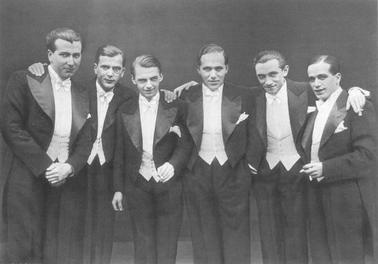
Right now in my German class, we're learning about a group called the Comedian Harmonists. They were active in Germany during the late 1920s and early 1930s, and their name suggests exactly what they were. They harmonized great together, and they sure did entertain audiences in the Weimar Republic. But their story got murkier from there, as the Nazi regime took over in Germany. That's because 3 out of the 6 members were Jewish, and another had a Jewish wife. There was internal strife among the group about whether to leave Germany, but they fortunately made the decision to do so. Their decision was prompted by a ban of their performances in Germany, as the Nazi regime ramped up its brutal antisemitism. It technically only banned the Jewish members from performing, but if you're missing half the group, it's essentially a total ban. But today, I want to focus more on the musical stylings of the Harmonists. And specifically, I want to focus on how they may have foresaw doo wop two decades before it happened. And they did so in Germany of all places!

The group was started by Harry Frommermann, an unemployed actor who had known what economic strife was like. The Weimar Republic had just gone through its era of hyperinflation, and Harry was living in a dingy apartment where his only companion was his parrot, Paganini. In Germany, his parrot would be better referred to as a "Papagei"! Frommermann went through a selective audition process for his group, where he tested people on his complex arrangements. He was heavily influenced by The Revelers, an American group that was famous for their close harmonies. Frommerman's group would later go on to incorporate that barbershop style harmony in their sound. They were famous for their ability to have individual members be prominent and then blend back to be less prominent within the overall sound. 

But how was their sound similar to doo wop? Well, Frommermann's voice was a prominent lead falsetto, as was the case with many doo wop groups (i.e. the Paragons). Also like with the doo wop style, the bassman has a prominent role. In the Harmonists, that role belonged to Robert Biberti. He got plenty of solos in the Harmonists songs, and his rich voice is definitely heard often. The group also likes to use nonsense syllables, much like the doo wop groups of the 1950s and 60s. They do so in a more barbershop-esque style, but it's definitely still comparable to doo wop. For example, the use of nonsense syllables is clear on their most famous record, "Veronika, der Lenz ist Da". In English, the name means "Vernoika, spring is here". On that song they scat on "da-da-da-da" for a while, and bassman Biberti has a nice little solo at the end. The way they use Biberti reminds me of how the early doo wop group the Ravens would use their bass, Jimmy Ricks. One last doo wop-like aspect of the Harmonists is sparse instrumentation. Typically, the only instrument playing on their songs is that of pianist Erwin Bootz. And it complements their harmonies quite well, just like Raoul Cita's piano did for the Harptones.

While the Harmonists typically entertained audiences with their upbeat and cheerful songs like "Veronika", their repertoire was certainly not limited to this. For example, during their last concert in Germany, they performed "Aufwiedersehen, leb wohl", or "Goodbye, my dear". It was a very emotional performance, especially with all the rising tensions with the Nazis. It was dramatized in the Comedian Harmonists movie I am currently watching, and the actors in that movie lip-synced to the original recording. Additionally, the movie showed the reaction of one audience member in particular, Erna. She had been the love interest of Harry, before Robert went full Eric Clapton and swooped her up. In any case, Erna was moved to tears by their last performance in Germany, and that's something that I don't think is purely movie drama. I truly appreciated how the movie used the Harmonists' original recordings, which are timeless. By the time the Harmonists' recorded in the early 1930s, music technology had moved a bit beyond the crudeness of "singing into a can" that was prominent in the early 20th century. So while the recording technology is still a bit primitive to today's ears, one is still able to appreciate the richness of the Harmonists harmonizing. 


That picture above features the Harmonists as they were cast in their 1997 movie. Harry Frommerman is seen at the top, and Robert Biberti is seen on the far right. In addition to all the great harmonies they create, the movie focuses on the power struggle of a relationship between Harry and Robert. Harry was Jewish and therefore wanted the group to leave Germany, while Robert wanted to stay. While Harry was the founder and arranger of the group, Robert was seen as more of a "leader", speaking for the group's finances. And obviously, the two men fought over Erna as well, who left Harry for Robert. Internal dispute was central to the group. Dispute was there when they left for America in 1934, and it was there when they eventually came back to Germany. Evidently, they returned to Germany because the non-Jewish members feared American internment as German nationals if they stayed during World War II. So after they moved back to Germany, the three Jewish members fled immediately to Vienna, where they performed with a new group. So clearly, their story is complicated and full of tension (hey, that's why a movie was made). But, their harmonies were, as they would probably put it, fantastisch.

Tuesday, April 19, 2022

10 Great Songs From Country Legend Hank Williams Sr.

Hank Williams left an incredible body of work during his six years in the recording studio. Though his life was not long, he left an undeniable impact on country music. I became a huge fan of his music last year. I know I still have more of his obscure songs to dive into, but here are 10 of my favorites so far.

1.) Move It On Over
You can consider this 1947 gem an early rock 'n roll song, and you can also consider it Hank's first hit. Four years before the commonly cited "Rocket 88", this song had a rollicking feel to it. I'm not saying it's the first rock 'n roll song by any means, but you can certainly see Hank's influence on the genre. After all, the basic melody of this song was copied in Bill Haley and The Comets' "Rock Around The Clock". Even the guitar solo is exactly the same! George Thorogood made a solid 80s cover of this song.

2.) Your Cheatin' Heart
This was recorded in Hank's final session in 1952, and what a sendoff it was. It exemplified the tragic country songs that he sang, and the song became a #1 country hit right after Hank died in 1953. The song described his first wife, Audrey, as a "cheatin' heart". He was telling that to his then-fiancée, Billie Jean Jones. Either way, Hank had a tough time with the women in his life, and perhaps should've listen to the advice of his own song: "I'll Be a Bachelor Till I Die".

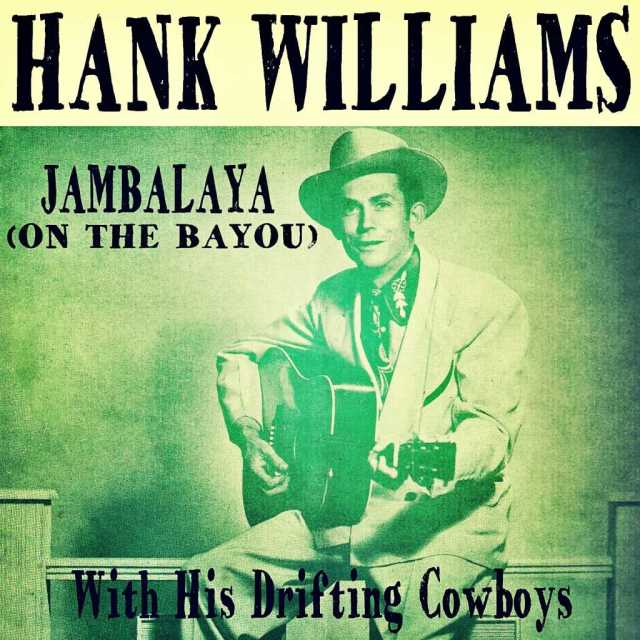
3.) Jambalaya (On The Bayou)
Also recorded in 1952, "Jambalaya" is an upbeat honky-tonk song with a Cajun twist. Hank heard Cajuns talking about the food they ate while on a tour bus, and was inspired to write this song. Though I am personally not a fan of the foods Jambalaya, crawfish pie, and filé gumbo... I do appreciate Cajun fried chicken. Gripes with seafood aside, Hank makes spending time on the Bayou sound like a joy. It stands out as one of the most happy songs in the Hank Williams catalogue, and was a #1 country hit for 14 consecutive weeks.

4.) Why Don't You Love Me
This upbeat ditty from 1950 is one of my absolute favorites. It's a very catchy tune, and I simply couldn't get enough of it in 2021. That's why it was my most played song that year on Spotify! It's another song about Hank's troublesome relationship with Audrey, but it's not one of those heartbreakers that are scattered throughout this list. It keeps a driving tempo throughout the song, and the Drifting Cowboys (Hank's backing band) put on a fantastic performance. Especially noteworthy are Jerry Rivers on fiddle, and Don Helms playing the steel guitar.

5.) Cold, Cold Heart
Whereas Hank Williams appealed to broke white people with his pained vocals on this song, Tony Bennett appealed to well-to-do white people with his mediocre cover that became a #1 pop hit. Whereas Hank Williams died in the back of a car in 1953, Tony Bennett is still alive at 95 and just won a Grammy. Well, that's the way it goes I guess. Again, another song inspired by his turbulent times with Audrey. Notice how Hank stretches out the word "apart" on this song, it's beautiful. No one could hold a note quite like him.
 
6.) (I Heard That) Lonesome Whistle
This 1951 song is about trains and prison, two common themes in country music, and two very common themes in Johnny Cash's music. That's why it's unsurprising that Cash would later cover this song. But the Man in Black could not top the passionate vocal performance that Hank puts on here. Again, it's very notable the way that Hank holds onto notes. My favorite line in the song is, "I'll be locked here in this cell 'till my body's just a shell, and my hair turns whiter than snow". Pure devastation.

7.) You Win Again
1952 was a horribly rough year for Hank in terms of his personal life and health. His marriage to Audrey met a brutal end, and then he wed a 19-year old he barely knew shortly afterwards. His back pain that he had since childhood was getting terrible, and he took lots of meds and drank more and more to numb the pain. It is with all this context that it's unsurprising his body couldn't take any more in the early hours of 1953. But it's with this context that you can understand how he wrote and sung such beautifully haunting songs as "You Win Again". If any song is a white flag of surrender, it's this one. And if any song exemplifies Hank's ability to hold onto a note, it's this one.

8.) I Can't Help It (If I'm Still In Love With You)
From the high cry of the steel guitar that begins this song, you can tell you're in for another one of Hank's desperately sad love songs. Much like with "You Win Again", Hank surrenders his love to his partner. He admits that despite all the pain she puts him through, he loves her just the same. Released as the B-side to "Howlin' at the Moon", it was a greater success on the chart. And listeners and DJs got that one right. Hank sang a beautiful duet of this song with Anita Carter, which you can see here

9.) Hey, Good Lookin'
Much like "Jambalaya", this is one of the few genuinely upbeat songs on the list. It's just a fun song to listen to, and Hank originally wrote it for Little Jimmy Dickens. But realizing the hit potential he had with it, Hank kept it to himself. Hank told poor Jimmy, "that song's too good for you". And what a great song it was! This song may not have stylistically been an influence on rock 'n roll, but it was in terms of the subject matter. It spoke of hot rods, dancing sprees, and soda pops. And Hank could treat his date to all this fun with a $2 bill... it was different times in terms of the value of money!

10.) I'm So Lonesome I Could Cry
The poetry that is this 1949 song makes it my absolute favorite Hank Williams song (well, this or "Why Don't You Love Me"... it's 1a and 1b). Hank's vocals sparkle on this song, comparing himself to a lonesome whippoorwill that "sounds too blue to fly". Each of the four verses are sung in the same form, with all four being punctuated by the verse "cry". There's no stylistic variation to these songs other than maybe the fiddle solos. But the lack of musical complexity doesn't matter in my view, as I simply appreciate the poetry. The song sounds like it was originally written as a poem. This song has inspired countless covers, including by Marty Robbins, Johnny Cash, and even Terry Bradshaw! But the best of the bunch is definitely this version by Randy Travis.

Well, that was my 10 favorite songs by Hank. Let me give an honorable mention to "Lovesick Blues", which was actually Hank's biggest hit during his lifetime. It launched him to country superstardom, even though everyone around him didn't like the song that much. And if you listen to it, it's solid and catchy, though certainly not as good as some of the songs on this list. Another song deserving of a shoutout is "Men With Broken Hearts". It was one of Hank's narrated songs he did as "Luke the Drifter". And as Hank said, it really is the most morbid song you'll ever hear.

Tuesday, April 12, 2022

10 Great Songs From The Man in Black, Johnny Cash

Johnny Cash is one of the true legends in the history of American music. His music transcended genres and tastes. That is why he's inducted into the Rock 'N Roll, Country, and Gospel Halls of Fame. From the Sun Records sound of the 1950s, to the emotional end in the early 2000s, that fantastic voice of Johnny Cash shined. There are many hundreds of songs he's recorded, and still plenty I have yet to listen to. But here are 10 of my favorites so far.

1.) Folsom Prison Blues- released in 1955

Johnny Cash's first single was "Cry! Cry! Cry!", b/w "Hey Porter". Not too shabby, I'd say. But, his second release, "Folsom Prison Blues", is an iconic song to this day. Cash kicked off his legendary "At Folsom Prison Album" with this song. And yet, I prefer the original. There's a certain hunger in his voice on the original cut, a desire to be known. Cash knew he had the talent, and was worthy of being famous. The song itself is about a desire to escape prison, and was inspired by a video Cash watched while stationed in West Germany during his Air Force service. Cash certainly spoke to prisoners, as we'll find out with other songs on this list.

2.) Give My Love to Rose- released in 2002

Originally, this song was buried as a B-side to "Home of the Blues" in 1957. "Give My Love to Rose" is the far better song. It combines all three elements common in Cash songs- trains, pain, and prison. A dying prisoner encounters a man while on a train back to meet his wife. He tells this stranger to give his love to his wife, Rose, and give her all his money. The song is heartbreaking, and gets more so as Cash goes along in his career. His performance at Folsom Prison is even better than his original. And then, his 2002 recording is even better than that. His brokenhearted voice perfectly encapsulates the meaning of the song. Cash deservedly won a Grammy for his final performance of this song.

3.) I Still Miss Someone- released in 1958

This was one of the first songs Cash recorded for Columbia Records, and was the B-side to the hit "Don't Take Your Guns to Town". Again, this is the superior song. The song was co-written by Cash and his nephew, Roy Cash Jr. It certainly incorporates the boom chicka boom style that was so prevalent during Cash's Sun Records days. But Cash is singing with more raw emotion than he was during those first records of the mid-50s era. He puts on another great performance of the song during his Folsom Prison album, though it is abbreviated. Therefore, the original 50s cut is the best version.

4.) I Walk The Line- released in 1956

At least at one point, it was pretty inarguably Cash's signature song, and you simply cannot go wrong with it. Did Cash "walk the line", and was he faithful with his first wife Vivian? No, but based on the stories I've heard, pretty much no rockstar was. It's probably why Cash referred to himself as a "C+ Christian", and his biographer called that a generous assessment. But musically, this song is iconic from its opening guitar riff, to Cash's great vocal performance. His humming actually has a purpose besides sounding cool; it is Cash adjusting to the various key changes throughout the song. The song was Cash's first #1 hit on the country charts, and even crossed over to the pop charts. Put simply, it made him a star.

5.) Dark as the Dungeon- released in 1968

No star musician could relate to the pains of the common man quite like Cash could. He covered this coal-mining song that was originally released by Merle Travis in 1946. Travis grew up in Kentucky, where he knew what the poverty of rural America looked like. Well, Cash came from similar circumstances growing up in Arkansas. So, he puts plenty of emotion into this performance from his legendary Folsom Prison album, and even a little bit of humor as well. One of the prisoners was laughing, and Cash said "No laughing during the song, please!". The prisoner replied "Hell", to which Cash said "I know, hell!". Then at the end of the song, he brilliantly adds that this is a live album for Columbia Records, so you "can't say hell or shit" or anything like that. It's a performance that exemplified both his vocal talent and charisma.

6.) Hurt- released in 2002

The second-most played Johnny Cash song on Spotify is "Ring of Fire", which we'll get to later. "Ring of Fire" has 252,000,000 plays. "Hurt" is in first place, with 466,000,000. That's nearly twice as many plays! It shows that "Hurt" has become Cash's most iconic song, at least among my generation. It speaks to a sadness and isolation that we Gen Z folk feel. And yet, ironically enough, this song wasn't sung by some young kid dealing with depression. It was sung by a broken-down Cash that was in the last year of his life. Much like "Give My Love to Rose", a lingering pain is clearly audible in his still-powerful voice. He covered this song by Nine Inch Nails and truly made it his own. And while "I Walk The Line" is the Cash anthem for Boomers, "Hurt" is the defining Cash song for my generation.

7.) A Boy Named Sue- released in 1969

This was my grandfather's favorite song, which is definitely a bit of irony, considering he was quite the mild-mannered man. Still, he was a big Johnny Cash fan, and it is still quite popular among fans today. It's certainly one of my favorites! Its irreverent humor comes from the legendary Shel Silverstein, who wrote another great song that Cash did, "25 Minutes to Go". But this more famous Silverstein composition was a roaring success for Cash from his prison concert at San Quentin. In fact, it was almost a #1 pop hit for Cash, being held out of the top spot by the Rolling Stones' "Honky Tonk Women". After the success of his prison concerts in the late 60s, Cash had ascended to superstar status, which would later lead to him having his own TV show.

8.) Ring of Fire- released in 1963

This song was written by Cash's future wife June Carter, and she sings quite a nice backing vocal on this particular song with Mother Maybelle and the Carter Sisters. It helped relaunch Cash's career with a big #1 country hit, as he was sputtering a bit with his records at the time. It had the unique idea of combining mariachi with country, as the trumpets are quite prominent on this song. Evidently, the trumpets were Cash's idea, as he heard them in a dream. The song is now regarded as one of Cash's all time classics, and is especially well liked by the critics. It is #87 on Rolling Stone's Top 500 all time songs list, well, the one from 2003 at least. 

9.) Cocaine Blues- released in 1968

Nothing gets a crowd of prisoners riled up quite like singing a song about doing a "shot of cocaine", then proceeding to "shoot your woman down". Cash sings this song with a certain snarl and conviction that absolutely captures his target audience. The Tennessee Three provide a simple but rocking instrumental track, one that is quite befitting of this track. But the main thing that makes this song entertaining is the lyrics, and the way Cash performs them. Cash noted that the song had "nearly did his voice in", and you can clearly hear that on this recording. He is leaning right into his skills as an entertainer on this brilliant song... but it's this last song on my list that's his true vocal masterpiece.

10.) Sunday Morning Coming Down- released in 1970

Kris Kristofferson has written two of the all time great songs in the history of music, in my humble opinion. There's "Me and Bobby McGee", and then there's this. "Sunday Morning Coming Down" exemplifies loneliness and isolation in a way that even "Hurt" cannot touch. It's the story of a loser who witnesses the happiness of the world around him, all on one lonely Sunday morning. And Cash sings from that perspective of isolation, knowing he's been in that world of loneliness given his history of drug problems. And what an incredible vocal performance he gives, famously adding extra emphasis to how he wishes he was "stoned". Just like the happy outside world mocks the narrator in this song, the happiness and bright sounds of the orchestra seem to mock Cash."Hurt" is the Cash song that my generation has such a strong emotional attachment to, and it is undoubtedly a fantastic and emotional song. But there's just something about Cash's voice when he was in the prime of his career. He has the heartbreak that the drugs and hard living caused him, while not sounding half-dead like he did in the early 2000s. This is my choice for greatest Cash song of all time, and one of the great songs of all time.

Graeme's Colossal Countdown Recap! (Episode 4: #451-436)

I'm back with a recap of my Colossal Countdown! Now, I didn't upload my blog last week, but perhaps during Winter Break I will catch...